Ecologies of Youth Empowerment Lab
Silverton School & Vanderbilt University
Research Triptych
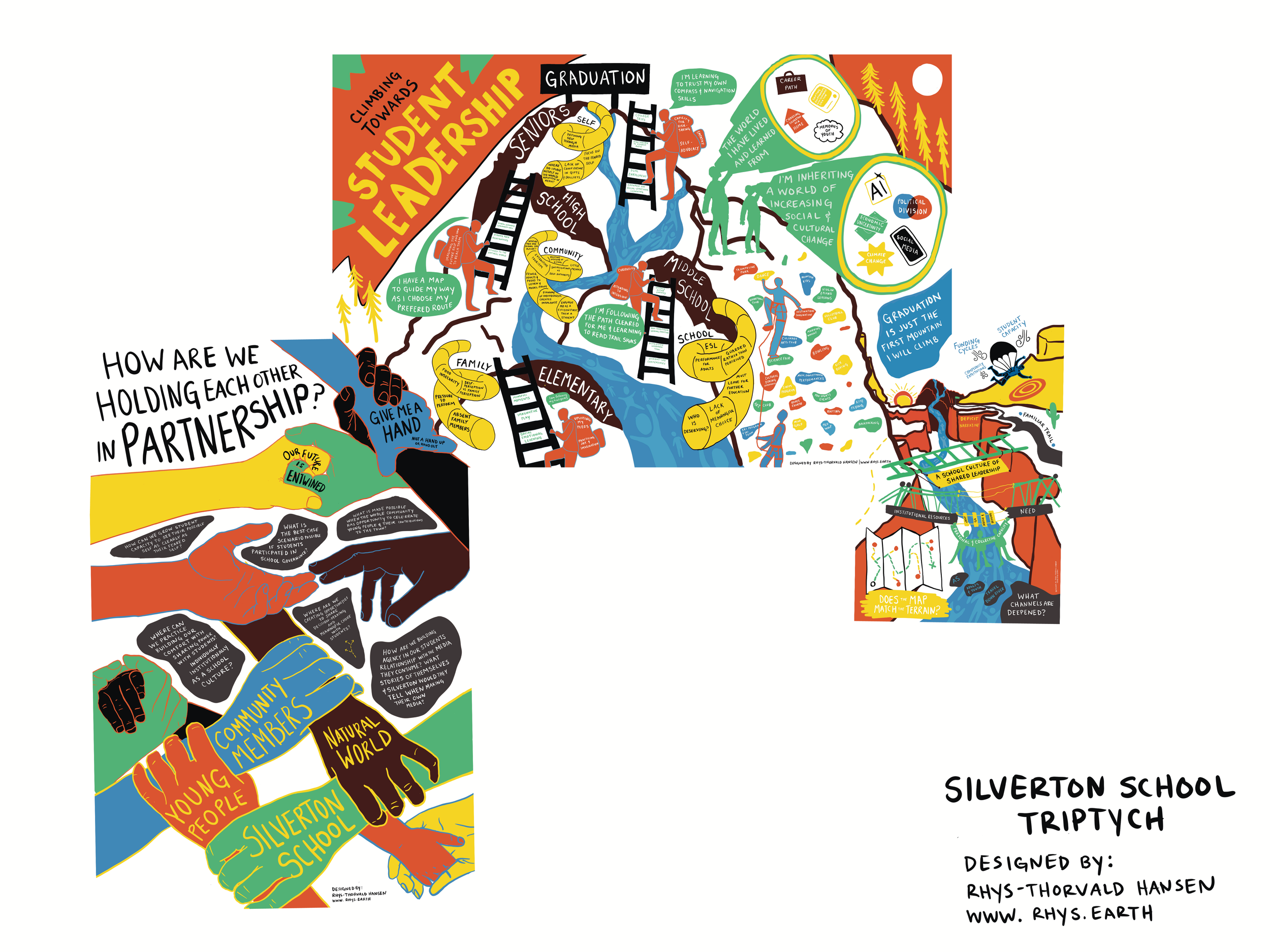
Academic publication forthcoming 2026.
In Fall 2024, I was invited to join Dr. Andrew Nalani in education research in Colorado through the Ecologies of Youth Engagement Lab.
Our research team spent a week with students and staff at the public school in Silverton Colorado. Our primary research question concerned student leadership in the school; specifically how and where they experienced leadership within the school and their community, and where students were interested in developing their leadership. There were approximately sixty children attending the school from ages 5-18, and the bulk of our research was conducted with middle and high schoolers.
With the goal of making the research findings accessible to the community sooner than the academic publishing timeline, I developed this infographic triptych in collaboration with the other 3 members of the research team.
Three perspectives on student leadership
click the images below to enlarge

Educator Experience
Silverton Colorado is a rural community where outdoor recreation and the natural world are closely entwined in the daily rhythms of life. Based on this, the research team chose the visual metaphors of mountains and canyons to reflect the nearby landscape in which our research participants were situated.

Student Experience
This graphic represents the core of our initial research findings at Silverton School, and reflects the information students shared about their own experiences.
The research team included Dr. Andrew Nalani, graduate student Ziyu Zhao, undergraduate student Elizabeth Ebhogiaye, and myself. Our research methodologies were ethnographic and emergent, as well as deeply rooted in the Creative Empowerment model developed by Peggy Taylor and Charlie Murphy at Partners for Youth Empowerment.

Researcher Inquries
This school was the site of our research in part because of their real commitment to advancing student leadership in their education system. While we knew the initial research findings would support this effort, we also wanted to reflect the places where we saw the most opportunity for transformative action. The above graphic includes strategic inquiries that would help close the gap between the current realities and the student goals for their leadership.
Art to erode the barriers between self and place
—
Art to erode the barriers between self and place —
About the Artist
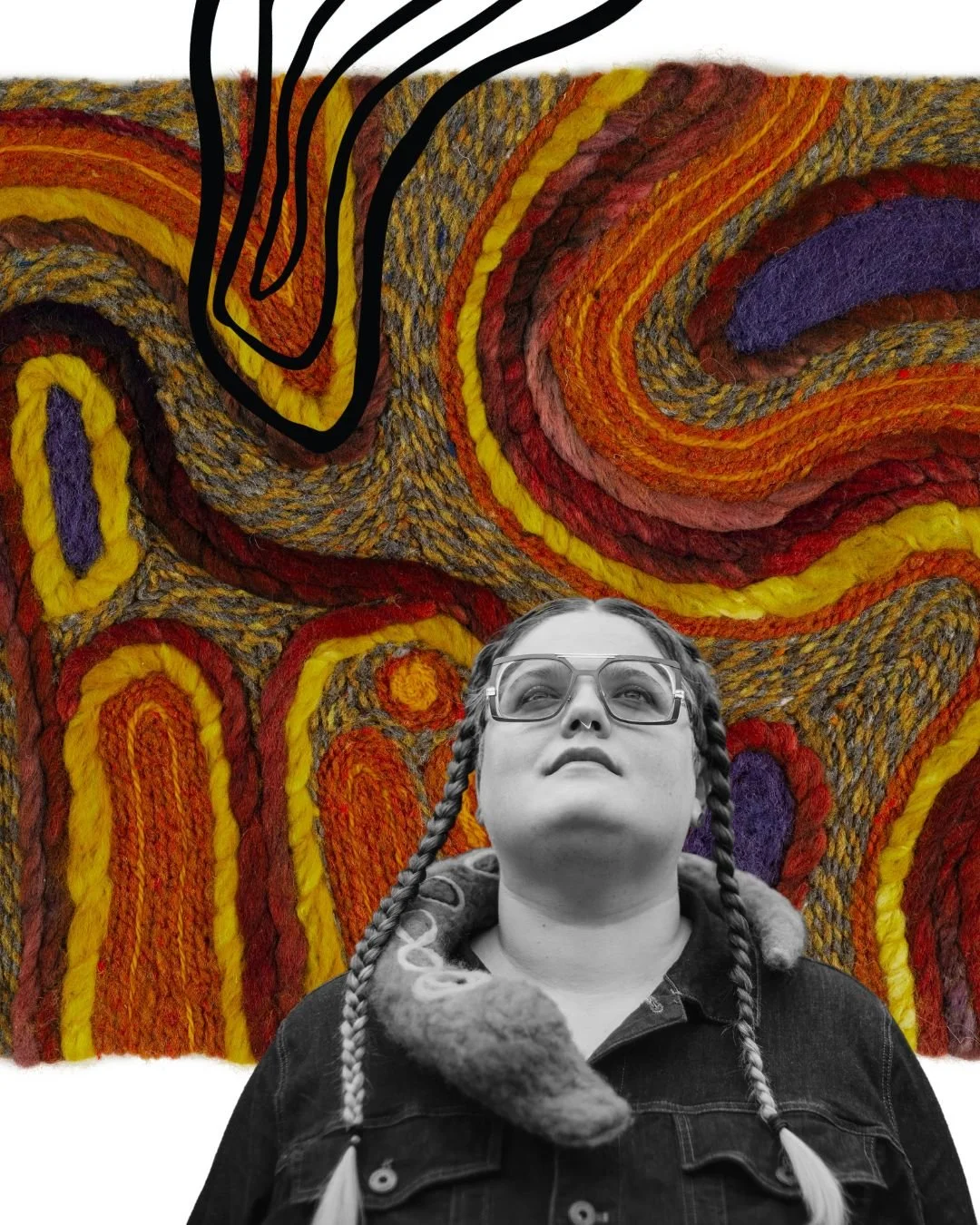
Rhys-Thorvald Hansen (they/them) is a trans folk artist and facilitator of European descent living on the coast of the Salish Sea in the US exclave of Point Roberts, Washington. Raised and rooted in rural communities, Rhys brings a queer ecological lens to both their creative practice and community work. Their path to art started in agriculture: originally studying anthropology and religious nationalism in college, they left academia to work on an organic farm, an unexpected step toward a life built around land, creativity, and positive systems change.
Rhys began making art six years ago as a way to navigate grief. What began as personal expression grew into a practice in service to community, place, and the belief that art is a natural human skill essential for making meaning and navigating change. Being a transgender settler on Coast Salish land deeply informs how they approach themes of power, transformation, and multiplicity—not just in identity, but in ecology, kinship, and ways of knowing.
Outside of their studio practice, their work now focuses on facilitation using the creative empowerment model created by Charlie Murphy and Peggy Taylor. As a facilitator, Rhys uses arts-based methods to help community groups grow their collective capacity for creative problem-solving, emotional resilience, and power-aware collaboration. Most often, they are working within movements connected to food systems, land stewardship, and social justice.